How to Raise a Generous Child Without Making Giving Feel Like a Duty
Table Of Contents
A small child pushes half a biscuit into a friend’s hand and watches them eat it with the look of someone who has just done something important. They haven’t been told to do this. Nobody assigned it. They just wanted to give something, and so they did.
This is where generosity starts — before money, before lessons, before the concept of charity has any meaning. It starts in the instinct to share, and your job as a parent is mostly to protect that instinct from being taught out of existence.
The difference between taught generosity and felt generosity
There are two kinds of generosity in children.
Taught generosity looks like this: a child gives because they’ve been told to, or because they’re expected to, or because not giving would cause a problem. They hand over the coin or the toy or the share of something, and it costs them in a way that leaves a small residue of resentment.
Felt generosity looks like this: a child gives because they want to — because something in them is moved by the person in front of them, or by a cause they care about, or by the particular pleasure of making someone else’s face change. The giving feels good. They want to do it again.
The aim of everything in this post is to keep children in the second category — or gently move them toward it if life has pushed them into the first.
Children are naturally generous — before it’s complicated
Very young children share spontaneously and frequently. They offer things without prompting. They’re distressed when others don’t have what they have. They make generous gestures that surprise adults with their sincerity.
This natural generosity doesn’t disappear on its own. What complicates it, sometimes, is the way adults respond to it. Forced sharing — “you have to give your brother a turn” — teaches children that giving is something done under pressure, not something chosen. The lesson that sticks isn’t generosity. It’s compliance.
Real generosity grows from choice. The child who gives voluntarily, whose giving is noticed and appreciated but never demanded, develops a relationship with generosity that will last. The child who is regularly forced to share often develops a protective relationship with possessions instead.
This doesn’t mean never asking children to wait their turn or include others. It means noticing the difference between the structures of fairness and the feeling of giving — and trying to protect the latter.
When giving becomes obligation
Once children understand that their money is divided into a give portion, the risk is that the giving becomes mechanical. Coin goes in jar. Jar fills. Money gets donated somewhere. No feeling attached.
Watch for this. A child who is going through the motions of giving has stopped learning anything from it. The jar is just another box to fill.
When you notice the giving has become routine without feeling, it’s time to reconnect the giving to something real. Which brings us to the single most important element.
Letting children choose where they give
This is the thing that changes everything: giving that a child has chosen for themselves lands differently from giving that has been assigned.
Ask them. Not “would you like to give?” but “what would you like to give to?” Is there an animal they care about? A place they’ve heard about that needs help? A person they know who is going through something difficult? An issue they find themselves talking about?
Let the answer be theirs. Don’t nudge it toward what you’d choose, or what seems most deserving in an adult sense. A child who is fiercely passionate about dogs and decides to give to a rescue shelter is learning something just as important as a child who gives to a hunger charity. The subject of the giving matters less than the ownership of the decision.
Once they’ve chosen, do something to make the cause real to them. Look at it together. Find out what the organisation actually does. Show them a picture. Let the cause have a face before the coin has a destination.
The give jar revisited
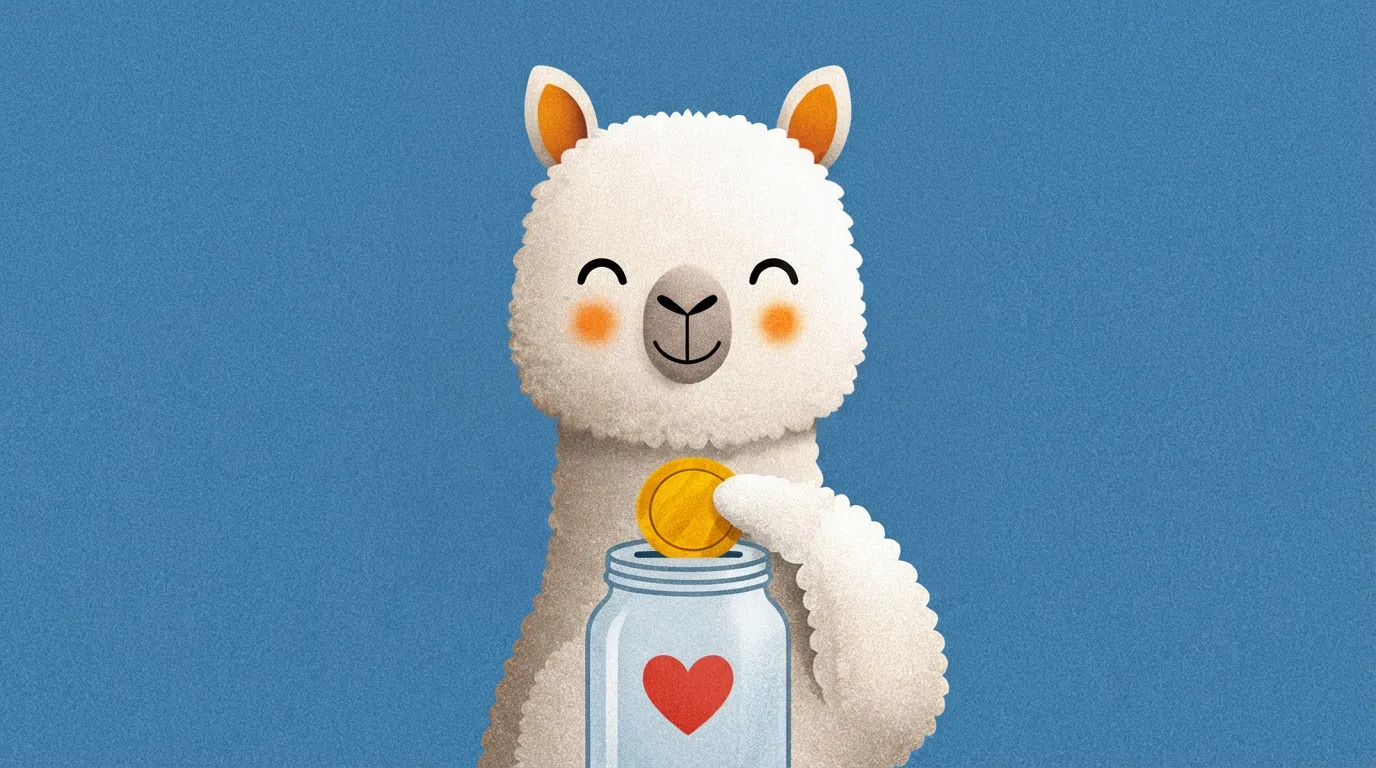
If you’re using a three-jar system at home, the give jar deserves the most attention and the most ceremony.
When the jar is full — or when a giving occasion arrives — sit down together to decide where it goes. Don’t rush this. Ask your child to remind you what they wanted to give to. Look it up. Find the donation page or the place to bring it. Make the giving an event rather than an errand.
If possible, let them make the donation themselves — clicking the button, dropping money into a collection, handing something over directly. The physical act of giving, done by the child’s own hands, is the moment where the lesson lives.
Making the giving real
Abstract giving teaches less than concrete giving. A coin dropped in a tin at a supermarket is fine. But if your child doesn’t know what the tin is for, or what happens to the coin after it falls, the experience is thin.
Better: know what you’re giving to. Know something about it. See what it does with donations. Even a brief, simple account — “that shelter gives dogs a safe place to sleep while they wait for a new home” — transforms the giving from a gesture into a connection.
Some families visit the organisations their children give to. Some volunteer alongside giving. These experiences make generosity vivid and real in a way that financial giving alone can’t.
Giving time, not just money
Money is one form of giving, and an important one to teach. But it’s not the only one — and for children who don’t yet have much money, it’s worth being explicit that giving time and effort counts too.
Helping a neighbour. Visiting a grandparent who doesn’t get many visitors. Making something for a friend who is going through a hard time. Writing a letter to someone who would be glad to receive it. Doing a job for a family member who is tired.
These aren’t financial lessons. But they’re generosity lessons, and they live in the same part of character development. A child who gives freely of their time and attention, as well as occasionally of their money, is developing a generous orientation to the world — not just a habit of donation.
When they don’t want to give
Sometimes children resist the give jar entirely. They want to keep everything. They don’t see why they should give money they earned.
Don’t force it. Forcing giving creates giving-avoidance.
Instead, stay curious. “What would you need to feel like you wanted to give to something?” Or: “Is there anything you hear about that makes you want to help?” Or simply: “It’s okay if you’re not sure yet. We can leave that jar for a while.”
The instinct usually returns when it finds the right cause. Sometimes it needs patience and a little more of the world being shown to a child before it does.
Giving at birthdays and celebrations
Birthdays and other celebrations are natural giving occasions — and they can go beyond the expected. Some families, when a child turns seven or eight, introduce the idea of one birthday gift being redirected to a cause the child chooses.
Not as a subtraction — as an addition. “As well as your presents, you’ve said you care about X. Would you like to ask relatives to donate to that as one of your gifts?” Some children love this. It makes them feel connected to something beyond themselves on a day that is otherwise all about them.
What you model matters most
Everything above will make more impression on a child if they see generosity operating in your own life.
Not as performance. Not as a thing done for appreciation. Just as an ordinary feature of your household — the way you respond when someone needs something, the way you talk about causes you care about, the small ways you give time and attention and occasionally money to things outside your own immediate world.
Children don’t learn generosity primarily from lessons. They learn it by living inside a generous household and absorbing its character. You don’t have to explain it. You just have to do it — and let them watch.
Meet Paca — Your Child’s First Financial Guide
The Paca Bank treats giving as a core pillar of financial literacy — alongside saving, spending, and earning. Paca guides children aged 5–16 through lessons that build character as well as competence. Designed to be read aloud with a parent. No ads. No subscription pressure. Single purchase per age pack, fully offline.
Packs available:
- 🐾 Little Savers (ages 5–7) — what money is, saving, needs vs wants, giving, shops, earning
- 🐾 Smart Spenders (ages 8–10) — budgeting, banks, smart spending, borrowing, goals
- 🐾 Money Builders (ages 11–13) — taxes, compound interest, investing, credit
- 🐾 Future Wealthy (ages 14–16) — real income, mortgages, ETFs, wealth building
- 🐾 Complete Pack — all four packs together
Download on the App Store · Get it on Google Play
Generosity as a way of seeing the world
A child who grows up with generosity as a natural part of how they move through the world doesn’t experience it as sacrifice. They experience it as connection — as a quiet, ongoing recognition that other people matter, that resources can flow toward need, and that having enough is partly about what you keep and partly about what you choose to share.
That isn’t a financial lesson. Or rather, it is — but it’s also something much larger. It’s a way of being. And it starts with half a biscuit, offered without prompting, to someone who looked like they could use one.