What Is a Bank, and Why Do People Put Their Money In One?
- Paca
- Money basics
- February 22, 2026
Table Of Contents
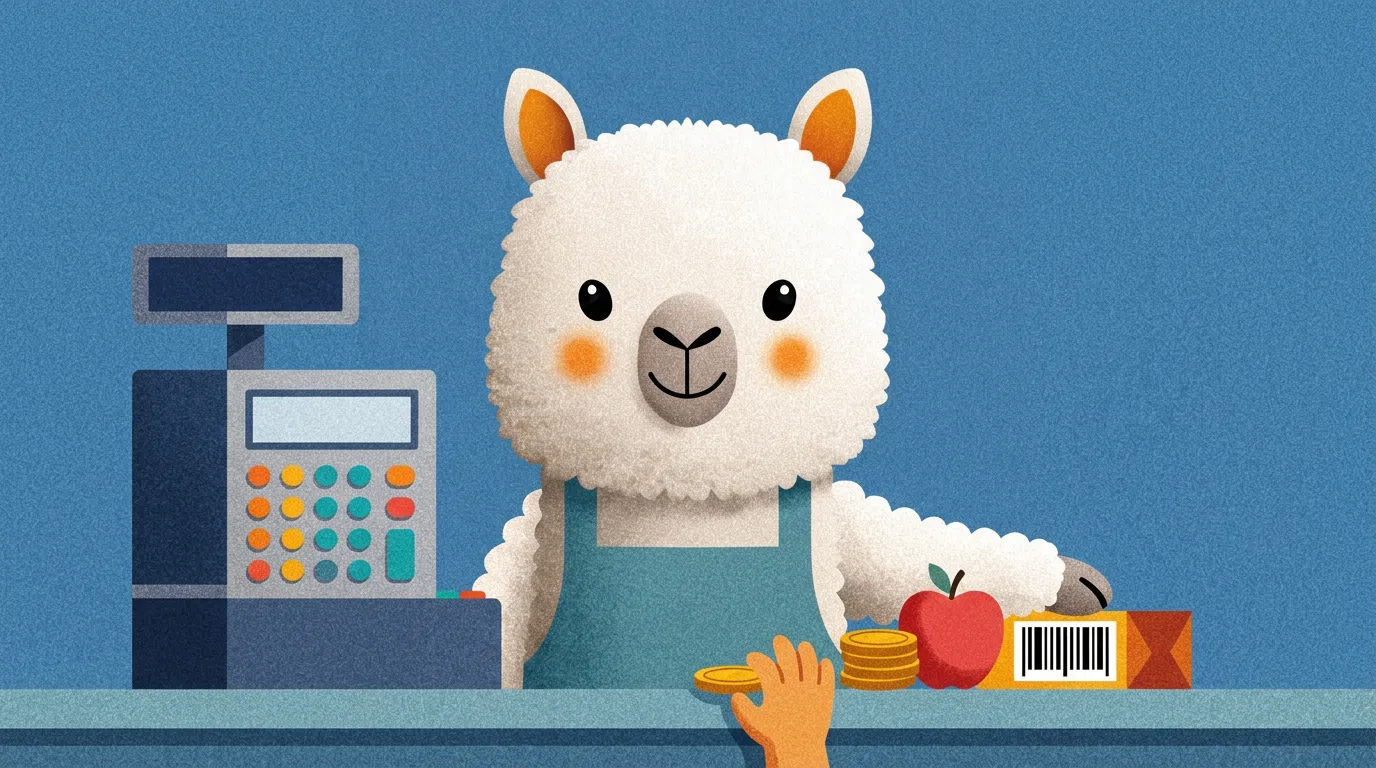
Your child watches you tap your card at the till. The machine beeps. You both walk away. A few steps later they ask: “Where did the money go?”
You say something about the bank. They nod. But there’s a look on their face — the particular look of a child who has filed your answer under grown-up things that don’t fully make sense yet and moved on.
If you’ve ever wanted to give them a better answer than “the bank,” this is for you.
The question they’re really asking
When a young child asks what a bank is, they’re not asking for a financial product overview. They’re asking something much more personal: Where does our money live? And is it safe?
Those are actually beautiful questions. The kind worth sitting down for.
A definition that fits in small hands
Here’s one that works at age five, six, seven:
A bank is a very safe place where people keep their money when they’re not using it.
That’s enough to start with. You don’t need to bring in interest rates, fractional reserve lending, or anything that makes your own eyes glaze over. Just: a safe place where money waits.
If your child looks satisfied with that, move on. If they look curious, that’s when the next bit becomes useful.
Why don’t we just keep it at home?
This is the follow-up question almost every child asks, and it’s a very sensible one. Why not keep it under the mattress, in a jar, in a tin on the shelf?
The honest answer has two parts:
The first is safety. A bank is a much harder place to lose money from than a jar on the shelf. Jars can be knocked over. Tins can get forgotten. A bank keeps careful track of exactly how much is there and makes sure it doesn’t disappear.
The second part — and this is worth saving until they’re a bit older and curious — is that banks can help money grow a little over time. But for now, “it’s safer there than almost anywhere else” is a perfectly complete answer.
The village with a safe
If you want to bring the explanation to life, here’s a little story that helps young children feel the shape of a bank without needing to understand how it works:
Imagine a village. Everyone in the village earns a little money — some from working, some from selling things. At night, they don’t want to carry their money home through the dark, so the village has a big, very strong safe. The person who looks after the safe is trustworthy and careful. Each villager hands over their money and gets a little note that says: “This is yours. It’ll be here when you need it.”
When anyone in the village needs their money back — for bread, for shoes, for a special trip — they bring their note to the safe-keeper, and they get exactly what they put in. Nobody else’s. Just theirs.
That’s a bank.
It’s simplified, of course. But for a five- or six-year-old, the key feeling is: your money doesn’t disappear. It waits. It’s looked after. It’s yours when you want it.
That feeling of security is the whole point of this lesson at this age.
What happens to the money while it’s there?
Older children — seven or eight — often want to know what the bank actually does with the money while it’s sitting there. It’s a sharp question.
The short version: banks take the money people save and lend some of it to other people who need it — for houses, for starting a small business, for big things that take time to afford. In return for keeping money at the bank, the bank gives the original owner a little extra back over time. That little extra is called interest.
You don’t need to go deep on this with a five-year-old. But if your seven-year-old asks, “so the bank is using my money?” — the truthful answer is: in a sense, yes, a little bit of it, but yours is always counted and always available for you. They keep very careful track.
Taking it back out
One thing worth reassuring young children about: the money doesn’t get stuck there.
Whenever you need it — at a shop, at a cashpoint, by tapping a card — the bank lets you use exactly what’s yours. The card in your pocket is really just a key to your money at the bank. When you tap it, you’re saying: “Use a little of what I’ve kept safe there, please.”
If your child has ever watched you use a cashpoint machine, this is a nice moment to explain: that’s the bank giving us back some of what we’ve kept there, so we can use it today.
What they’ll see when you visit
If you ever take your child into a bank branch — rarer these days, but still worth doing once — point out a few things:
The counter, where people bring questions or sort out their accounts. The cashpoint, often just inside the door, where people pick up cash. The general quietness, which surprises most children — they expect something more dramatic, like a vault with a spinning wheel. The ordinary-ness of it is worth talking about. “It looks pretty normal, doesn’t it? That’s because safe things usually do.”
If they ask where all the money is kept, you can say: most of it is stored as numbers in very secure computers now, not as a mountain of coins in a back room. That usually prompts a very good conversation about what money actually is — which is a whole separate lesson, and a brilliant one.
The question that always comes next
“Do we have a bank?”
Yes. And this is the moment, if you haven’t already, to tell them what your family’s bank is called. Let it have a name. Point it out the next time you drive past one. Show them the app on your phone, if you use one, and let them see that their name isn’t on it — but yours is, and yours is for the family.
Some parents take this moment to open a children’s savings account together. That’s a wonderful thing to do. But even if you don’t, just making the bank real — named, visible, yours — does something important for a young child. It moves money from an abstract mystery into something that has an address.
Meet Paca — Your Child’s First Financial Guide
If you’d like to keep these conversations going — calmly, at your child’s pace, without having to invent every explanation from scratch — The Paca Bank was built for exactly this.
Paca is a warm, curious alpaca who guides children aged 5–16 through short money lessons, one idea at a time. Every lesson is designed to be read aloud with a parent. No ads. No subscription pressure. No backend tracking. Just a single purchase per age pack, fully available offline.
Packs available:
- 🐾 Little Savers (ages 5–7) — what money is, saving, needs vs wants, giving, shops, earning
- 🐾 Smart Spenders (ages 8–10) — budgeting, banks, smart spending, borrowing, goals
- 🐾 Money Builders (ages 11–13) — taxes, compound interest, investing, credit
- 🐾 Future Wealthy (ages 14–16) — real income, mortgages, ETFs, wealth building
- 🐾 Complete Pack — all four packs together
Download on the App Store · Get it on Google Play
The one thing worth saying today
You don’t need to explain everything about banks in one conversation. You really don’t. A five-year-old needs one idea to hold, not a lecture.
If they ask today, give them the simplest version: a bank is a safe place where our money waits until we need it. Let that sit for a few weeks. When they ask again — and they usually do — you can add a little more.
Financial literacy for young children isn’t built in one sitting. It’s built in a hundred small moments, each one adding a piece. You’re already doing it. The fact that you read this far is proof enough of that.